LEA Data Processes Toolkit


Timely, accurate, valid, and reliable. Your state’s local education agencies (LEAs) should have well-documented processes to ensure that their IDEA data meet all these criteria. But do they? IDC can help. We created this resource to help states support their LEAs as they document their processes for collecting and reporting IDEA data.
Did You Know?
Documenting LEA data processes has the potential to be a huge catalyst for building a culture of shared ownership and understanding of IDEA Part B data at the local level. The LEA Data Processes Toolkit supports building and maintaining the capacity of LEAs to use high-quality data for continuous improvement.
LEA Data Processes Toolkit: Overview
Interested in knowing more? Here’s where to begin. Share this overview resource with your team then talk to your state director of special education about securing the assistance of IDC’s dedicated TA providers.
Download the OverviewToolkit Components
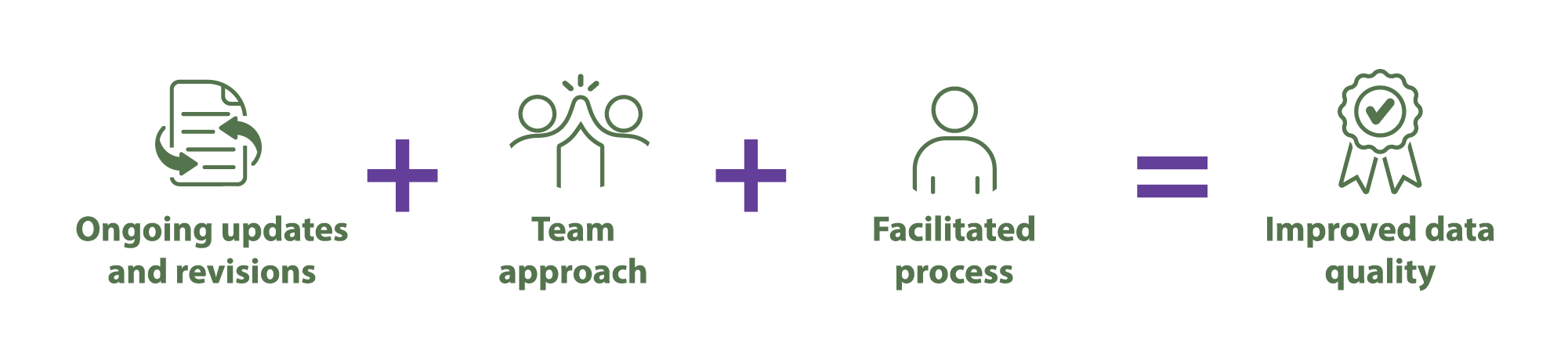
Equation for Success
We encourage LEAs to use the LEA Data Processes Toolkit in collaboration with their state education agency (SEA) and LEA contacts as well as IDC technical assistance (TA) specialists, who can facilitate and document the data processes in real-time during the discussion. They will walk through in a way that is supportive and responsive to each LEA’s unique needs.
618 Data Collection Calendar
This tool helps states plan for and submit the 618 data collections on time and accurately. Each collection report includes a due date with corresponding timelines for tasks and activities.

Quick References for IDEA Part B, 2025
This quick reference guide brings essential information about IDEA data requirements together in one place. These references may be useful for new and experienced state staff who work with IDEA data and who need an easy way to reference key information.
These protocols cover information about three of the 18 State Performance Plan/Annual Performance Report (SPP/APR) indicators as defined by Section 616 of IDEA. LEAs collect and report the data that correspond to these indicators. States then analyze and report that data to OSEP via the SPP/APR.
These protocols cover information about five of the seven data collections defined in Section 618 of IDEA. LEAs collect and report these data to their state, who in turn submit them to OSEP via EDFacts.
This protocol serves as an overview of LEA infrastructure. It covers background information on the state, including descriptions of the data systems, key staff, and general policies and procedures that apply to IDEA data.